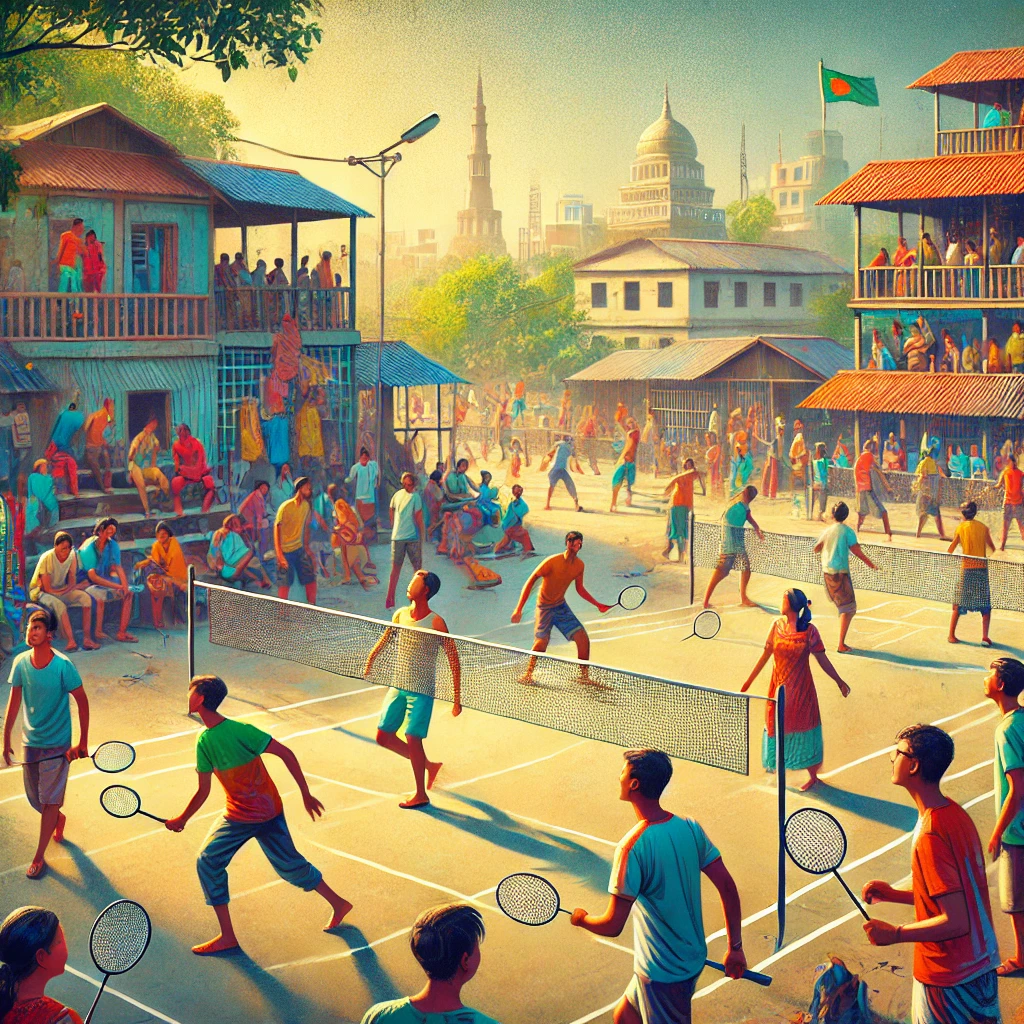
In recent years, badminton has become one of the fastest-growing sports in Bangladesh, gaining popularity across different demographics and regions. Once considered a casual pastime mostly played in urban areas, badminton is now evolving into a competitive sport that attracts both amateur and professional players. The increase in interest can be attributed to several factors, including growing accessibility, support from sports organizations, and a heightened focus on sports development at the grassroots level.
Badminton is particularly popular due to its accessibility; it requires minimal equipment—a shuttlecock, rackets, and a net—making it easy to set up and play almost anywhere. The sport is played both indoors and outdoors, allowing people to engage in it year-round, even in limited spaces. Moreover, as the country develops its sports infrastructure, more badminton courts and facilities are becoming available, particularly in schools, colleges, and local clubs, further fueling the sport’s popularity among the youth.
The History and Origins of Badminton in Bangladesh
Badminton in Bangladesh has a long and storied history, though it took time to emerge as a mainstream sport. The origins of badminton in the country can be traced back to British colonial rule, when the sport was introduced to South Asia. Initially, it was played by the elite and affluent class in urban areas like Dhaka and Chittagong, often at private clubs and social gatherings. Over time, the sport spread to broader sections of society, thanks in part to its simplicity and the growing appeal of racket sports globally.
After Bangladesh gained independence in 1971, badminton began to develop more formally. The Bangladesh Badminton Federation (BBF) was established in 1972, soon after independence, to regulate and promote the sport at the national level. Early on, the sport remained relatively low-profile compared to cricket and football, which dominated the national sports scene. However, the BBF played a key role in organizing domestic tournaments and promoting the sport in schools and colleges.
Through the 1980s and 1990s, badminton started gaining traction, especially among the younger generation. More and more educational institutions began including badminton in their physical education programs, and local clubs started holding friendly matches and amateur tournaments. By the early 2000s, the sport had a noticeable presence in both rural and urban Bangladesh, and efforts to professionalize badminton were underway. The introduction of national championships and international participation helped raise its profile further.
The turning point for badminton in Bangladesh came with the increased availability of television and internet in the 21st century. Global badminton events like the Olympics, All England Open, and World Badminton Championships became accessible to the public, inspiring young players to pursue the sport seriously. As media exposure grew, so did the demand for proper coaching, training facilities, and competitive opportunities, further embedding badminton into the national sports culture.
Factors Contributing to the Rise of Badminton
Several factors have contributed to the rise of badminton in Bangladesh, making it a sport of choice for many:
- Increasing Accessibility in Urban and Rural Areas: With the expansion of sports facilities in both urban and rural regions, more people have access to badminton courts and equipment. This has enabled a larger portion of the population to engage with the sport, turning it from a casual activity into a more structured pursuit.
- Government and Private Support for Badminton Initiatives: The government, along with private sponsors and corporations, has started to invest in sports development programs, including badminton. These initiatives aim to nurture talent from a young age, offering better training opportunities and resources for aspiring players.
- The Influence of Regional and International Tournaments: Exposure to regional and international badminton tournaments, where players from neighboring countries like India, Malaysia, and China compete, has fueled interest in the sport. This has inspired many young athletes in Bangladesh to pursue badminton professionally, believing that they too can succeed on the global stage.
- The Role of Media and Social Platforms in Popularizing the Sport: The rise of social media and digital platforms has provided badminton with much-needed visibility. Young athletes share their training, victories, and experiences on platforms like Facebook, Instagram, and YouTube, encouraging others to take up the sport. Moreover, televised matches of international tournaments have sparked widespread interest, inspiring a new generation of players.
These factors together have created a thriving environment for badminton in Bangladesh, allowing the sport to grow both in popularity and competitiveness.
Notable Bangladeshi Badminton Players and Achievements
Bangladesh may not yet be a global powerhouse in badminton, but several notable players have emerged over the years, contributing to the sport’s growing reputation in the country. One of the most recognized names is Shapla Akhter, a dominant figure in women’s badminton. Shapla has consistently represented Bangladesh in regional and international competitions, bringing home multiple national titles and medals from South Asian tournaments.
On the men’s side, Enayetullah Khan is another prominent figure who has made significant contributions to the sport in Bangladesh. He has not only excelled as a player but has also played a pivotal role in promoting badminton through coaching and mentorship. His leadership in badminton academies has helped nurture young talent across the country.
Bangladesh has also seen some success in the South Asian Games, with badminton players earning medals in various categories over the years. In doubles and mixed doubles events, Bangladeshi pairs have often reached the podium, showcasing the country’s growing competitiveness in regional tournaments.
Despite limited international exposure, the accomplishments of these players have inspired many young athletes to take badminton more seriously, aiming to represent their country on a global scale. The growing number of talented players signals a bright future for badminton in Bangladesh.
Steps to Promote Badminton Further in Bangladesh
- Invest in Better Infrastructure and Coaching Programs
Developing modern facilities with quality badminton courts and advanced training equipment is key to further promoting the sport. The government, along with private organizations, must invest in establishing badminton academies in both urban and rural areas to provide aspiring players with better resources. - Organize More Regional and Local Tournaments
Tournaments play a critical role in giving players competitive exposure. More regional and local competitions need to be organized to give young players a platform to showcase their skills, gain match experience, and progress to higher levels. - Increase Funding for Grassroots Development
To ensure that badminton continues to grow, funding at the grassroots level is essential. Local clubs and schools should receive financial support to establish regular training programs, hire qualified coaches, and purchase equipment, making badminton accessible to all. - Promote Badminton in Schools and Colleges
Introducing badminton as part of physical education curricula in schools and colleges will not only increase participation but also help identify talent early. Regular inter-school and inter-college competitions should be held to encourage students to take up badminton more seriously. - Raise Awareness Through Media and Sponsorships
Sponsorships from private companies can help elevate the sport’s profile by supporting events, tournaments, and young athletes. Additionally, raising awareness through media coverage, including television and social media, will continue to popularize badminton and inspire more players.
By taking these steps, Bangladesh can build on its growing interest in badminton and establish a strong foundation for the sport’s future.
The Future of Badminton in Bangladesh
The future of badminton in Bangladesh looks promising as the sport continues to attract players and fans from all corners of the country. With increased government and private sector support, more facilities and resources are being developed to nurture new talent. The growing visibility of badminton in regional and international arenas also gives young athletes the motivation to aim higher and compete on larger stages.
There is significant potential for Bangladesh to become a competitive force in badminton, especially in regional competitions like the South Asian Games. If the country continues to invest in grassroots development and infrastructure, it could produce world-class players capable of competing internationally. Moreover, as badminton gains popularity in schools and colleges, a new generation of athletes will emerge, eager to represent Bangladesh on global platforms.
In conclusion, badminton is steadily becoming a prominent sport in Bangladesh, and with the right focus on development and promotion, its future appears bright. The growing interest in the sport signals the possibility of international success, making badminton a key part of Bangladesh’s sporting landscape.